Harvard
Lessons in ChemistryHarvard brings together two worlds that Reverend Wakely initially regards as opponents: the study of religious creation and the evidence-driven study of chemistry. It is where his effort to learn enough science to refute it instead unsettles his faith, and where a young Calvin Evans gives that conflict an unexpected personal focus.
Academic Setting and Wakely’s Crisis
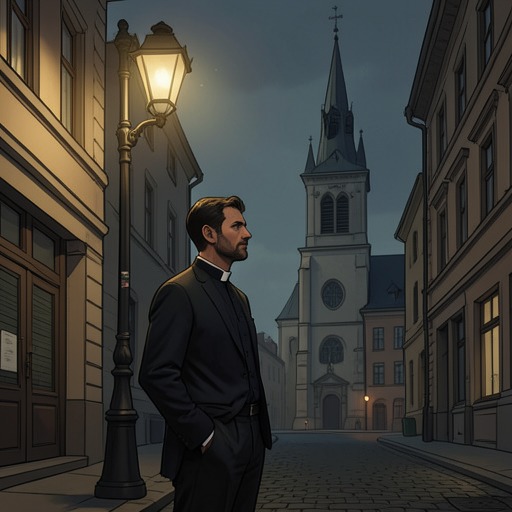
As a fifth-generation minister studying at Harvard’s divinity school, Wakely audits a chemistry course with the intention of understanding the scientific account of creation so he can argue against it. A year of study changes the terms of that effort. Learning about atoms, matter, elements, and molecules leaves him struggling to believe that God created anything—not heaven, earth, or even pizza. The conflict is consequential in a setting shaped both by his family’s expectations and by science’s demand for evidence, something he rarely encounters in his future work.
Calvin Evans at the RNA Panel
Harvard is also where Wakely encounters Calvin Evans. Evans has come to sit on a panel of RNA researchers, and Wakely attends on a Saturday night. Though the youngest panelist, Evans says little while the others discuss how chemical bonds form, break, and reform through an “effective collision.” When a listener asks for an example of an ineffective collision—one lacking energy and producing no change, yet still having a large effect—Evans answers, “Religion,” and leaves.
From Encounter to Correspondence
The exchange gives Wakely’s abstract struggle a human point of contact. Evans’s remark stays with him, and he decides to write to Evans to say so. Harvard thus marks the beginning of their connection: a chemistry discussion intended to describe change becomes the occasion for a religious challenge that prompts Wakely to reach out.